

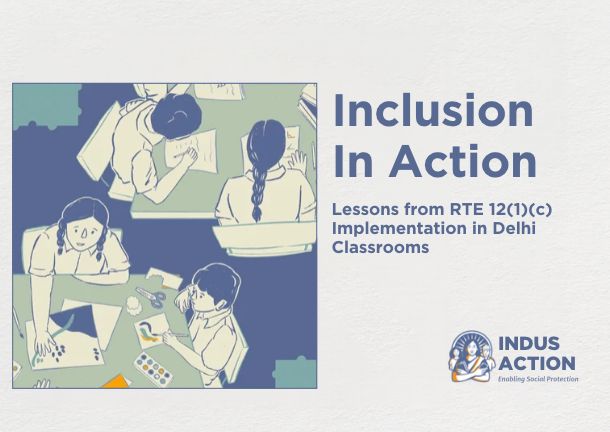
Education
Researchers identify the practices that work to strengthen inclusion through approaches that combine inclusive teaching, supportive leadership, equitable opportunities, and strong partnerships with parents…
Read More

Indus Action Initiatives
G-7, 2nd Floor, Lajpat Nagar III
New Delhi – 110024
 011 4172 9407
 info@indusaction.org


 English
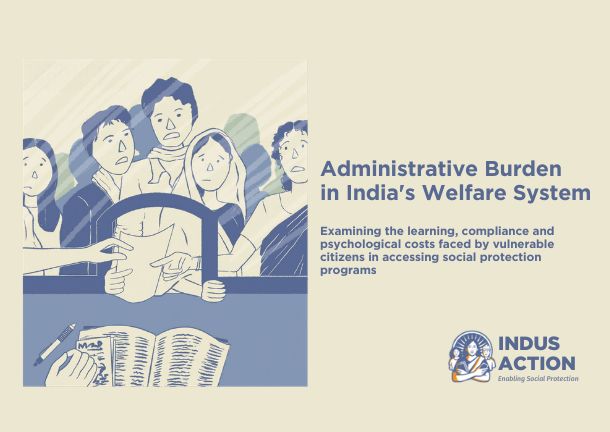
Administrative burden refers to the learning, compliance, and psychological
costs that citizens incur when interacting with government programs and
services. These costs accumulate across stages, leading to compounding
costs in time, money, and psychological stress. Such barriers erode trust
in the government and limit citizens’ ability to benefit from programs and
schemes, underscoring the need for more accessible, user-friendly public
services.
Authors: Anany Kapoor, Umang Kamra, Niyoshi Parekh, Rahul Karnamadakala Sharma
Education
Researchers identify the practices that work to strengthen inclusion through approaches that combine inclusive teaching, supportive leadership, equitable opportunities, and strong partnerships with parents…
Read More
Events
Lives do not change gradually. They change during moments of transition and disruption: when a household faces a sudden shock, navigates a key life…
Read More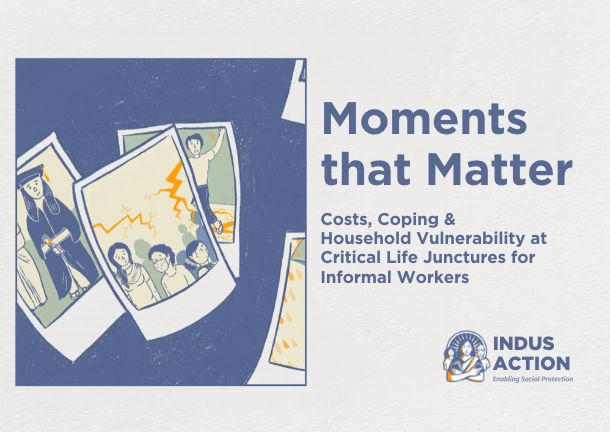
Systemic learnings
The COVID-19 pandemic exposed the deep fragility of informal work, pushingmillions back into chronic poverty. It became clear that compounding shocksand entrenched vulnerabilities were…
Read More