

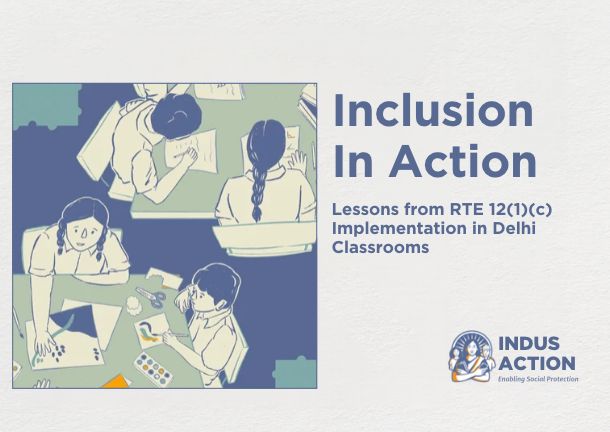
Education
Researchers identify the practices that work to strengthen inclusion through approaches that combine inclusive teaching, supportive leadership, equitable opportunities, and strong partnerships with parents…
Read More

Indus Action Initiatives
G-7, 2nd Floor, Lajpat Nagar III
New Delhi – 110024
 011 4172 9407
 info@indusaction.org


 English
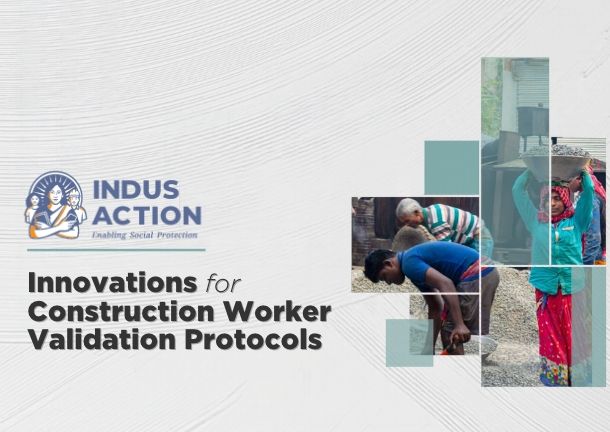
This policy brief focuses on one of the major research questions in BOCW
implementation: What is the most efficient process to validate whether an applicant
is a building and construction worker? There are varying entry-level documentation
and validation processes in different states, ranging from lenient to stricter models.
On the one hand, lenient models make the application process more accessible for
vulnerable construction workers, reducing exclusion. On the other hand, more
stringent checks inspire confidence in the validity of a BOCWWB’s database,
enabling quicker delivery of claims without additional verification. Thus, there is a
need to strike a careful balance between the two, ensuring that vulnerable
categories like interstate migrants (hereon, migrant workers) and labour chowk
workers are not excluded while ensuring sufficient checks for higher confidence in
BOCWWB registration data. As large-scale disbursals such as pollution ex-gratia in
North India become recurring, with other climate-related DBTs for relief (ex.,
heatwaves) on the horizon, this problem statement becomes even more relevant for
efficient welfare delivery. Through this policy brief, Indus Action aims to contribute
to the ecosystem’s knowledge and drive action towards resolving this critical
challenge. The brief accomplishes this by offering a deeper context of the problem
statement, mapping implementation processes across 8 states, highlighting
significant gaps, and proposing innovations regarding documentation and
validation processes.
Author: Umang Kamra
Education
Researchers identify the practices that work to strengthen inclusion through approaches that combine inclusive teaching, supportive leadership, equitable opportunities, and strong partnerships with parents…
Read More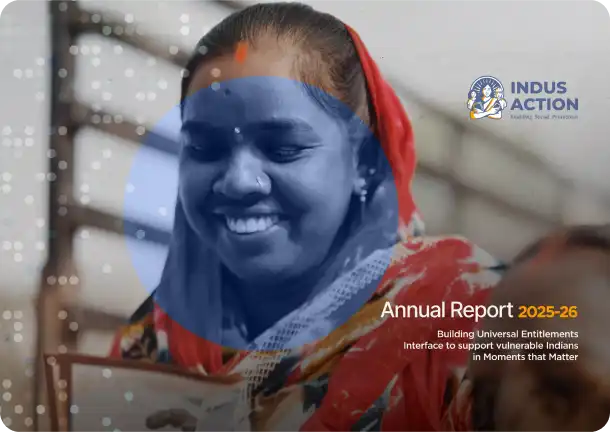
Events
Lives do not change gradually. They change during moments of transition and disruption: when a household faces a sudden shock, navigates a key life…
Read More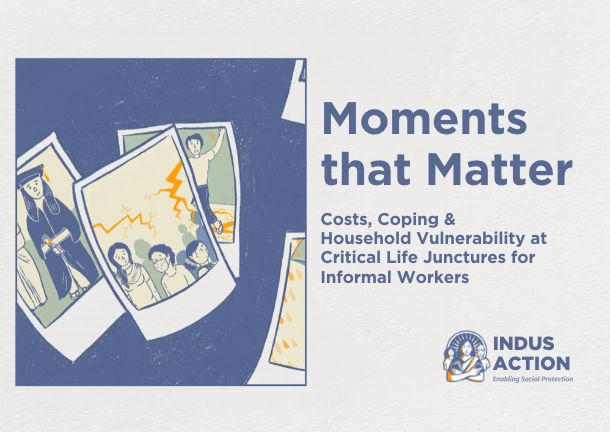
Systemic learnings
The COVID-19 pandemic exposed the deep fragility of informal work, pushingmillions back into chronic poverty. It became clear that compounding shocksand entrenched vulnerabilities were…
Read More