

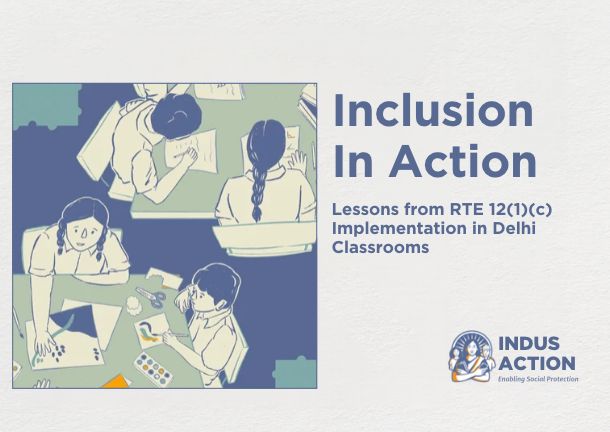
Education
Researchers identify the practices that work to strengthen inclusion through approaches that combine inclusive teaching, supportive leadership, equitable opportunities, and strong partnerships with parents…
Read More

Indus Action Initiatives
G-7, 2nd Floor, Lajpat Nagar III
New Delhi – 110024
 011 4172 9407
 info@indusaction.org


 English
Education
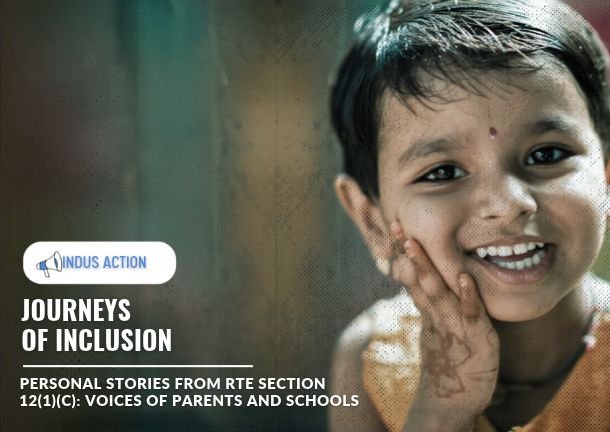
This report, titled “Journeys of Inclusion: Personal Stories from RTE 12.1.c – Voices of Parents and Schools”, captures the experiences and reflections of parents who have availed of the Right to Education (RTE) Act’s Section 12.1.c provision and schools who are involved in the implementation of the same. This provision mandates the reservation of 25% of seats in private unaided schools for children from economically weaker sections (EWS) and disadvantaged groups (DG). Through a collection of personal narratives, the report sheds light on the lived realities, challenges, and successes of stakeholders navigating the inclusion of children from diverse backgrounds into mainstream education. The stories provide valuable insights into the impact of inclusive education on students, families, and school communities, offering recommendations to further strengthen the implementation of this landmark policy.
Schools play a pivotal role in the realization of the RTE Act’s vision of inclusive and equitable education. As institutions of learning and growth, they are at the forefront of fostering equitable opportunities for all children, regardless of their socioeconomic background. Under Section 12.1.c, private unaided schools are entrusted with the responsibility of admitting and supporting children from marginalized communities. This requires a commitment to not only academic inclusion but also social and emotional integration. By creating an environment of acceptance, understanding, and collaboration, schools contribute significantly to breaking the cycle of educational disadvantage and nurturing a more inclusive society. The schools mention how students are learning to value diversity and form connections beyond social identity. The perspectives shared in this report highlight examples of three schools and how they navigate these responsibilities, adapt to challenges, and create meaningful learning experiences for every child.
Education
Researchers identify the practices that work to strengthen inclusion through approaches that combine inclusive teaching, supportive leadership, equitable opportunities, and strong partnerships with parents…
Read More
Events
Lives do not change gradually. They change during moments of transition and disruption: when a household faces a sudden shock, navigates a key life…
Read More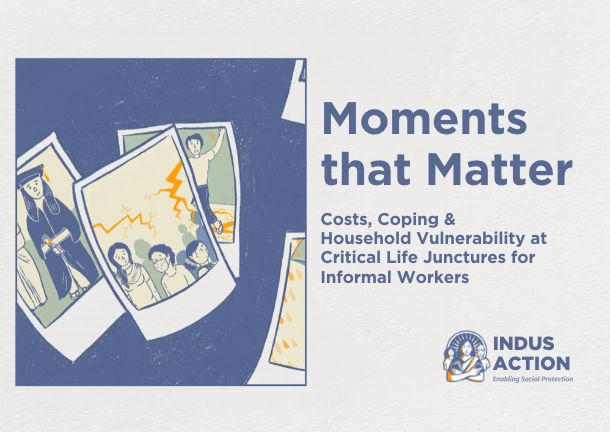
Systemic learnings
The COVID-19 pandemic exposed the deep fragility of informal work, pushingmillions back into chronic poverty. It became clear that compounding shocksand entrenched vulnerabilities were…
Read More