

Events
Lives do not change gradually. They change during moments of transition and disruption: when a household faces a sudden shock, navigates a key life…
Read More

Indus Action Initiatives
G-7, 2nd Floor, Lajpat Nagar III
New Delhi – 110024
 011 4172 9407
 info@indusaction.org


 English
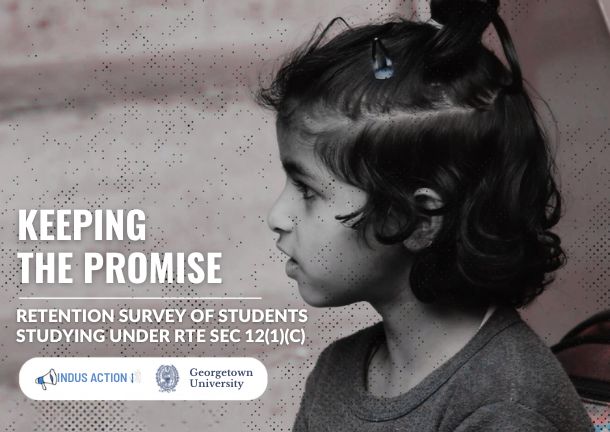
In an effort to promote educational equality and social inclusion, India passed the Right to
Education Act in 2009. The act guarantees free and compulsory elementary education for children in
grades 1-8. Clause 12(1)(c) of the RTE Act specifically mandates that private unaided schools reserve
25 per cent of their seats in elementary grades 1- 8 for children from economically weaker sections and
disadvantaged groups. While the number of students gaining access to private school education under
the RTE 12(1)(c) clause is reported through government websites, the demographic of the students
being admitted, the retention rates once admitted, and the social and financial constraints they might
experience in their schooling are not. Thus, Indus Action has been studying students’ retention,
educational status and discrimination faced by students admitted under Section RTE 12(1)(c) since
2017. Studying retention allows governments to check for the successful implementation of the
provision and to determine whether private schools are an optimal choice for children from
disadvantaged backgrounds.
Authors: Cristina Pirela, Roujia Lin, and Serenity Fan
Editor: Mansi Middha
Events
Lives do not change gradually. They change during moments of transition and disruption: when a household faces a sudden shock, navigates a key life…
Read More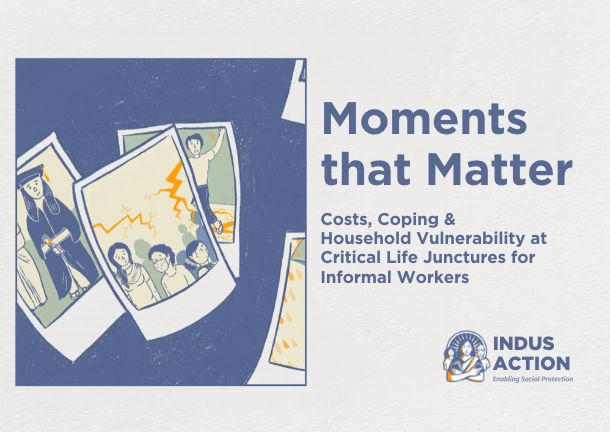
Systemic learnings
The COVID-19 pandemic exposed the deep fragility of informal work, pushingmillions back into chronic poverty. It became clear that compounding shocksand entrenched vulnerabilities were…
Read More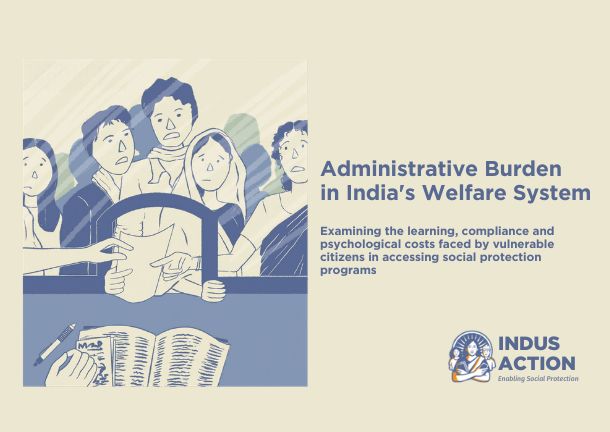
Systemic learnings
Administrative burden refers to the learning, compliance, and psychologicalcosts that citizens incur when interacting with government programs andservices. These costs accumulate across stages, leading…
Read More