

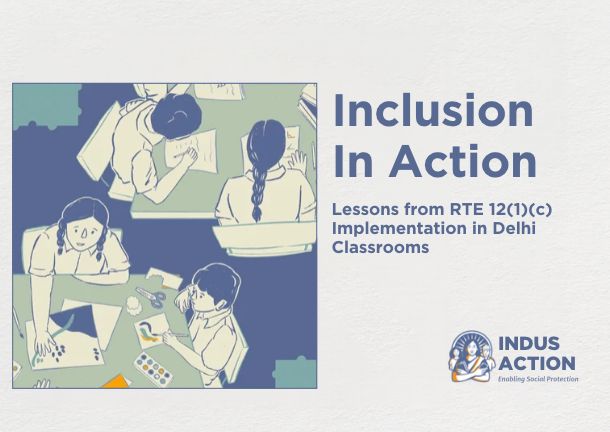
Education
Researchers identify the practices that work to strengthen inclusion through approaches that combine inclusive teaching, supportive leadership, equitable opportunities, and strong partnerships with parents…
Read More

Indus Action Initiatives
G-7, 2nd Floor, Lajpat Nagar III
New Delhi – 110024
 011 4172 9407
 info@indusaction.org


 English
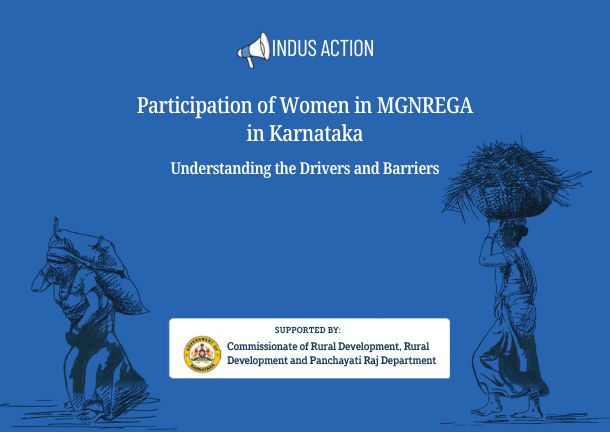
Labour & Livelihoods
The National Rural Employment Guarantee Act (NREGA) was a landmark legislation
passed by the Parliament of India after a successful struggle for employment guarantee
legislation. NREGA was notified on 7th September, 2005 in 200 rural districts in its first
phase of implementation, which took effect from 2nd February, 2006. In 2007–08, it was
extended to an additional 130 rural districts. The remaining districts implemented the
programme from 1st April, 2008. The programme covers the entire country with the
exception of districts that have a hundred percent urban population. The laudable Act
aimed to benefit thousands of rural poor unskilled adults, comprising the most
marginalised and deprived sections, especially women. This was aimed through the
provision of 100 days of work initially, and more recently 150 days, based on the
socioeconomic parameters in select districts (e.g. drought prone), during a financial year.
It was a programme to provide basic income and employment opportunities to poor
households in rural areas where other sources of employment do not exist or are limited.
This will ensure livelihood for all adults as well as supplement the rural community’s
income during lean seasons. The programme differs from earlier wage employment
programmes in its rights-based and demand-driven approach to public work. This Act is
the largest ever public programme that goes beyond poverty alleviation and recognises
employment as a legal right. This flagship programme is the largest employment
programme in the world. It provided the unique opportunity to people from rural India to
earn their own income without any discrimination of caste or gender. In 2009, the name
NREGA changed to MGNREGA with a significant shift from the Centre formulating the
rules for implementation to the states.
Education
Researchers identify the practices that work to strengthen inclusion through approaches that combine inclusive teaching, supportive leadership, equitable opportunities, and strong partnerships with parents…
Read More
Events
Lives do not change gradually. They change during moments of transition and disruption: when a household faces a sudden shock, navigates a key life…
Read More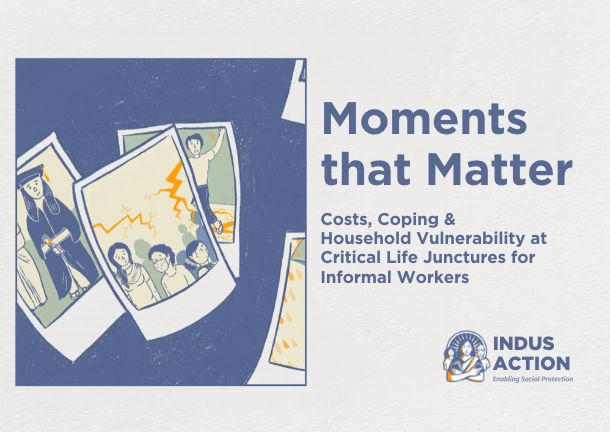
Systemic learnings
The COVID-19 pandemic exposed the deep fragility of informal work, pushingmillions back into chronic poverty. It became clear that compounding shocksand entrenched vulnerabilities were…
Read More